
IGP dog training is a modern, three-part dog sport designed to test a dog’s temperament, trainability, and tracking, obedience, and protection skills. This discipline, formerly known as Schutzhund training or IPO dog sport, serves as a rigorous benchmark for working dogs, proving their suitability for various demanding roles.
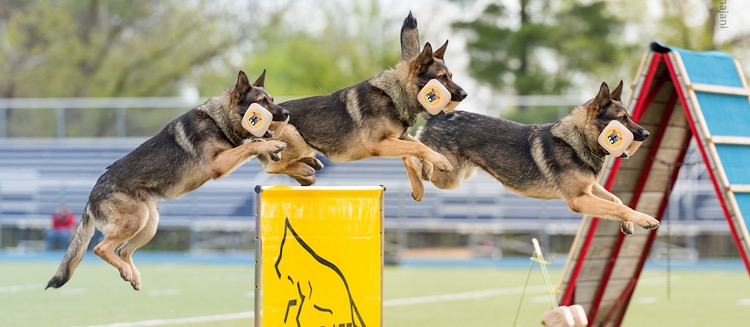
Image Source: davekroyer.com
Deciphering the Core of IGP Dog Training
IGP stands for Internationale Gebrauchshunde Prüfungsordnung, which is German for International Utility Dog Regulations. It is a sport built on the foundation of good companionship and strong partnership between a dog and its handler. This form of advanced dog training focuses on developing a dog’s natural abilities in a structured, fair environment. The sport is meant to identify dogs with stable temperaments, sound nerves, and high working drives.
History and Evolution: From Schutzhund to IGP
The sport has a rich history rooted in German police and military work. Originally, it was called Schutzhund training. This name directly translated to “protection dog sport.” As the sport grew globally, it evolved. The governing body, the FCI (Fédération Cynologique Internationale), standardized the rules. In 2004, the name changed to IPO dog sport (Internationale Prüfungsordnung). More recently, in 2019, the name shifted again to IGP. This change aimed to reflect the sport’s broader scope beyond just protection work, emphasizing tracking and obedience equally.
The evolution shows a clear move toward comprehensive evaluation. Today, IGP dog training is seen as a complete measure of a dog’s usefulness and balance.
Why Choose IGP Dog Training?
Many people choose this path for their dogs for several reasons. It is more than just a hobby; it builds a better companion.
- Temperament Testing: IGP is superb for testing a dog’s nerves. A dog that spooks easily or shows aggression without cause will fail the initial phases.
- Strong Bond: The training requires close teamwork. This intense cooperation deepens the relationship between the handler and the dog.
- Versatility: The three phases ensure the dog is well-rounded. It is not just about barking or biting; it’s about precision and focus.
- Sport Certification: Achieving a title, like IGP 1, 2, or 3, is a recognized dog sport certification. This proves a high level of achievement.
The Three Pillars of IGP Sport Training
IGP is structured around three distinct phases. A dog must pass all three phases in a single competition to earn a title (IGP 1, 2, or 3). Each phase tests different aspects of the dog’s abilities.
Phase 1: Tracking (Fährtenarbeit)
Tracking tests the dog’s nose and focus. This is often the most technically demanding part for the handler.
What Tracking Requires
The dog must follow a disturbed track laid by a person. The track ages before the dog runs it. The dog must stay focused on the scent line without help from the handler.
- Track Age: Tracks can be 30 minutes to two hours old for higher levels.
- Track Length: Tracks get longer as the difficulty increases.
- Object Finding: At the end of the track, the dog must correctly indicate (or “blind”) objects laid along the path. This shows excellent scent discrimination.
This phase showcases a dog’s natural scenting drive. It requires intense mental engagement from the dog. It is foundational to tracking dog training principles.
Phase 2: Obedience (Gehorsam)
The obedience phase tests how well the dog listens to the handler in distracting settings. Precision and speed are key here.
Key Obedience Exercises
The exercises must be performed flawlessly. The dog should work happily and quickly.
| Exercise | Description | Key Skill Tested |
|---|---|---|
| Heelwork | Walking with the handler, on or off the leash, through patterns. | Attention and control |
| Stand/Sit/Down | Changing positions from a distance upon command. | Reliability and distance control |
| Recall | Running quickly back to the handler when called, often from a long distance. | Speed and eagerness |
| Retrieve on Flat | Bringing back a dumbbell tossed on the ground. | Drive and focus |
| Retrieve over Obstacle | Jumping a hurdle or wall while retrieving the dumbbell. | Athleticism and courage |
This section of dog obedience trials demands thousands of repetitions. The goal is automatic response, regardless of distractions.
Phase 3: Protection Work (Schutzdienst)
This phase is what most people associate with the sport, though it is only one-third of the evaluation. It requires a highly trained helper (decoys) to work with the dog. This phase tests courage, nerve, and control around a supposed threat.
Components of Protection Work
Protection work is highly controlled and standardized. It is not random aggression. The dog must engage only when directed and release the sleeve immediately upon command.
- Searching: The dog searches for the helper hidden in blinds (boxes).
- The Hold and Bark: Once the helper is found, the dog must bark intensely at the helper while keeping distance. This is called the “guard” or “hold and bark.”
- The Fight/Apprehension: When commanded, the dog engages the protective sleeve worn by the helper. The bite must be full and firm.
- The Release: The dog must instantly let go of the sleeve when the handler calls, even if the helper is moving or resisting.
- The Courage Test: In the highest levels, the dog must run across a field with the helper throwing things to distract it, then engage the helper when commanded.
This phase heavily involves protection dog training techniques but always balances aggression drive with absolute control.
Comprehending Breed Suitability and Temperament
Not every dog is suited for IGP. While the rules technically allow most breeds to compete, the nature of the work favors specific characteristics.
Ideal Breed Profiles
Historically, German Shepherds and Rottweilers dominated the sport. These breeds were developed for utility and guarding. However, many breeds now compete successfully.
- Working Lines: Dogs from true working lines often possess the inherent drives needed for IGP. These drives include high prey drive (for toys/rewards), high fight drive (for protection), and high defense drive (for guarding).
- Terrier and Herding Mixes: Well-bred dogs from breeds like Belgian Malinois, Giant Schnauzers, and even some larger Boxers can excel.
Temperament: The Non-Negotiable Factor
The most critical aspect is temperament. A dog in IGP must be stable, confident, and social. Judges look for:
- Sound Nerves: The dog should not flee from loud noises, strange objects, or pressure.
- Willingness to Work: The dog must enjoy the activities. It should view training as a fun game.
- Biddability: The dog must genuinely want to please the handler.
If a dog shows poor nerve strength or unpredictable aggression outside the controlled setting, it should not be involved in this type of sport, especially the protection phase. This is why IGP dog training serves as a massive temperament filter.
The Path to Certification: Levels of IGP
Earning an IGP title is a progressive journey. It starts with basic foundation work and moves up through rigorous testing. The progression ensures skills are solid before moving to the next challenge.
IGP 1: The Foundation Title
IGP 1 is the entry-level championship. It confirms the dog has the basic skills needed to proceed safely in the sport. The required standards are high but achievable for a dedicated amateur team.
IGP 2: Intermediate Proficiency
To reach IGP 2, the team must demonstrate improvement in all three phases. The tracking paths are longer and more complex. The obedience routines demand quicker responses and more distance work. The protection phase involves greater pressure from the helper.
IGP 3: Master Level
IGP 3 is the highest standard for the general sport. It requires near-perfect execution. The tracking tests are at their maximum difficulty, including turns and longer track aging times. Obedience must be sharp and reliable under severe distraction. Protection work demands impeccable control during high-intensity scenarios.
Higher Titles and Variations
Beyond the three main levels, there are other specialized avenues that branch from core IPO training:
- IGP-FH: Focuses exclusively on advanced tracking, requiring extreme endurance and precision over very long, difficult tracks.
- IGP-V: A lower introductory level, sometimes used for dogs still developing but ready to try parts of the sport.
- Ring Sport Training: While distinct from IGP, sports like French Ring or Mondio Ring share the same philosophical goals regarding control, obedience, and protection, often serving as an alternative path for handlers.
The Role of the Helper in Protection Work
The helper, or decoy, is crucial to the success of the protection phase. They are not an adversary; they are a highly trained partner to the handler and dog.
Skills Required for Decoys
A competent helper must:
- Control the Situation: They must manage the environment to test the dog safely without allowing the dog to bite inappropriately.
- Sell the Scenario: They must act convincingly as a threat to elicit the dog’s appropriate protective response.
- Provide Fair Pressure: They must know exactly when to increase or decrease pressure based on the dog’s performance and drive level.
The integrity of protection dog training depends heavily on the helper’s skill. Badly trained helpers can ruin a dog’s confidence or create dangerous habits.
Training Methodology: Building the IGP Dog
Effective IGP dog training relies on positive reinforcement mixed with clear boundary setting. The goal is to build drive rather than force compliance.
Tracking Training Methods
Tracking is developed early. It starts with short, simple tracks laid by the handler.
- Scent Imprinting: The dog learns that following the scent line leads to high-value rewards (food or a toy).
- Distraction Proofing: As the dog progresses, distractions (other people, food smells, noisy objects) are added to the track.
- Object Indication: The dog is taught to stop or sit when it finds an object on the track, signaling its discovery to the handler.
Building High-Level Obedience
Obedience work in IGP demands intense focus, often achieved through advanced operant conditioning.
- Shaping Behavior: Breaking down complex actions (like a fast recall over a jump) into tiny steps, rewarding each successful step.
- Proofing: Systematically adding environmental noise, distance, and duration until the behavior is automatic. If the dog only obeys when the environment is quiet, it has not truly been proofed.
Protection Training Philosophy
In modern IGP dog training, the bite work is carefully controlled. The dog is not trained to “attack” people. Instead, it is trained to engage a specific target (the sleeve) on command and to cease engagement instantly on command.
- Drive Building: The helper uses toys or tugs to build the dog’s desire to engage the sleeve. The sleeve becomes the ultimate reward.
- Control Exercises: This is the most crucial part. The dog must switch off the drive immediately. If a dog refuses to release the sleeve, it fails the test, regardless of how well it engaged. This proves the handler’s mastery over the dog’s powerful drives.
Deciphering Competition Rules and Judging
Competitions are run according to strict guidelines set by the national and international organizations governing the sport. Fairness is paramount.
The Judging Panel
A team of judges evaluates the performance. For a dog sport certification, judges score each exercise out of 100 points. A minimum score (usually 70 points) is required in each of the three phases to pass the level. A total score of 220 out of 300 passes the competition for an IGP 1 title.
Common Reasons for Point Deductions
Judges look for precision, clarity of command, and the dog’s attitude. Points are lost for:
- Hesitation: Taking too long to respond to a command.
- Lack of Enthusiasm: Performing tasks slowly or without drive.
- Incomplete Work: Not reaching the correct position or not holding the object long enough.
- Loss of Control: In protection, failing to hold the sleeve or releasing it too slowly.
IGP vs. Other Dog Sports
While IGP is comprehensive, handlers may compare it to other disciplines.
IGP vs. IPO (Historical Context)
As mentioned, IPO dog sport is the former name. The structure remains largely the same, but the official terminology has updated to IGP to better reflect modern training ethics and focus.
IGP vs. Mondioring/French Ring
These are known as “Ring Sports.” They are similar in that they involve tracking, obedience, and protection. However, Ring Sports often feature more dynamic, unpredictable obstacles and a more theatrical presentation in the protection phase. IGP remains more standardized and focused on the working utility of the dog.
IGP vs. Dog Agility or Dock Diving
Agility and dock diving test athleticism and speed over obstacles. IGP tests nerve, control, and scent work, which are more related to traditional working roles (like police or military service). IGP dog training is far more demanding on temperament and focus than pure athletic sports.
Building a Successful IGP Team
Success in this sport requires commitment, time, and mentorship. It is not a solo endeavor.
Finding the Right Mentor and Club
The best way to start is by joining a club affiliated with a recognized organization. Experienced handlers can provide vital guidance, especially in the nuanced areas of protection dog training and complex obedience sequencing. A good mentor helps a new handler recognize when a dog is succeeding or struggling.
Time Commitment
Consistency is more important than marathon training sessions. Most successful teams train 4–6 days a week, focusing on short, high-quality sessions. Achieving the IGP 1 title usually takes 18 months to 3 years of consistent work, depending on the dog’s aptitude. Moving to IGP 3 can take five years or more.
Equipment Essentials
Basic gear is simple, but specialized equipment is needed for advanced work:
- Tracking harness (lightweight, specialized design)
- Long line (for recall and long-distance work)
- High-value training tugs and toys (the primary reward)
- Properly fitting bite sleeve (introduced gradually)
Frequently Asked Questions (FAQ) About IGP Dog Training
Q: What breeds are best suited for IGP dog training?
A: Breeds traditionally favored include German Shepherds, Rottweilers, and Belgian Malinois due to their inherent working drives and physical capabilities. However, any dog with stable nerves and high work ethic can potentially compete in IGP dog training.
Q: How is IGP different from basic obedience training?
A: Basic obedience focuses on household manners and simple commands. IGP dog training takes these skills to an extreme level, requiring flawless execution under high distraction, distance control, and adding specialized skills like tracking and protection work. It is a highly competitive sport standard, not just basic compliance.
Q: Do I need a police or military dog to compete in IPO dog sport?
A: No. While the skills test similar areas, IGP is a civilian sport. You do not need prior military or police experience. Many handlers are hobbyists or companion owners looking for a structured activity.
Q: Is protection dog training dangerous for the dog?
A: When done correctly under the guidance of experienced trainers following IGP dog training regulations, it is very safe. The training focuses intensely on control. The dog is taught when and how to engage the sleeve and, most importantly, when to stop. The sport actively filters out unstable dogs.
Q: How often can a dog earn a dog sport certification?
A: A dog can attempt to earn a title (like IGP 1) as often as the club or trial organizer allows, but they can only earn the title once per level. A successful team might compete annually to maintain or move up to the next level.
Q: What is the primary difference between IPO training and Schutzhund training?
A: There is no practical difference today. Schutzhund training is the historical name for the sport. IPO dog sport was the official name for a period, and now the sport is officially called IGP. The rule set has seen minor updates over the years, but the three phases remain the core.