
If your dog licks you, it means several things, often combining affection, communication, grooming, and sometimes, a learned behavior. Dogs lick humans for many reasons, ranging from simple displays of dog affectionate licking to more complex needs tied to survival or social bonding.
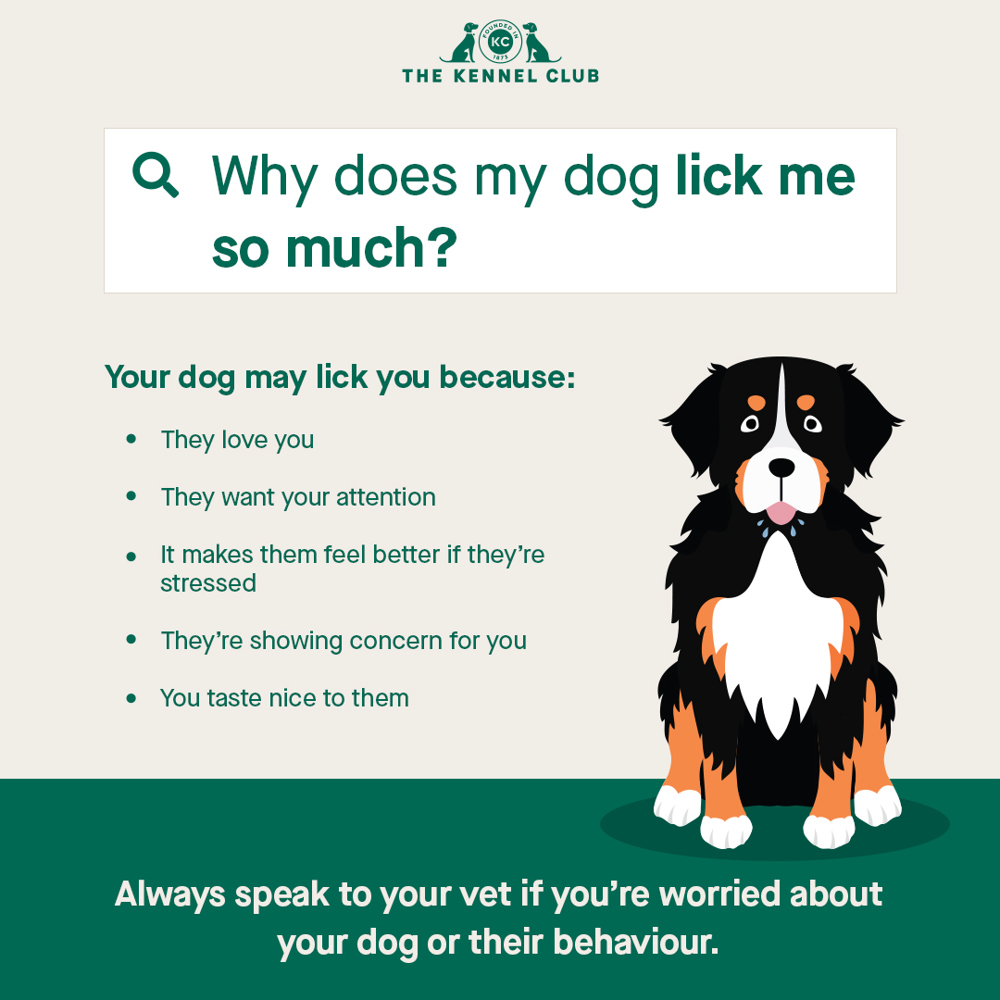
Image Source: www.thekennelclub.org.uk
Deciphering the Roots of Dog Licking Behavior
Licking is a core part of how dogs interact with the world and with each other. It’s a language spoken fluently by our canine companions. To truly know why does my dog constantly lick me, we need to look at the behavior through several lenses: instinct, emotion, and environment.
Instinctive and Evolutionary Drivers
Many reasons dogs lick humans stem from ancient pack behaviors. In the wild, puppies lick the faces of returning adult dogs to solicit food—regurgitated meals. While your dog isn’t expecting kibble on your face now, that instinct remains deep-seated.
- Nurturing Instinct: Licking is a major component of maternal care. Mother dogs lick their puppies to clean them, stimulate breathing, and show comfort. When your dog licks you, they may be treating you as part of their close social group, offering you care.
- Taste Exploration: Dogs explore their world primarily with their noses, but also with their tongues. Your skin has salty residues—sweat, lotions, or natural oils. For a dog, this is a novel and often appealing taste. This is a very basic reason for the dog licking meaning.
Emotional Connections and Affection
The most common interpretation for many owners is that licking equals love. While not the only reason, strong emotional bonds are often reinforced by this action.
Dog Affectionate Licking
When your dog gives you a quick, gentle lick, especially after you return home or while relaxing together, it is a clear sign of bonding.
- Greeting Rituals: Licking is a friendly hello. It shows excitement and pleasure at seeing you.
- Bond Building: Physical contact, including licking, releases feel-good hormones (like oxytocin) in both dogs and humans. This strengthens your relationship.
Communication: Canine Licking Communication
Licking is a powerful tool for sending messages without barking or growling.
- Seeking Attention: If you react strongly—even by pushing them away—when your dog licks you, they learn that licking gets a response. If they are bored or want to play, a lick might be their way of saying, “Look at me!”
- Appeasement Signals: Sometimes, licking can be a sign of mild stress or deference. If your dog feels unsure in a situation, or if they are trying to show respect to a higher-ranking member of the “pack” (you), they might offer a calming lick.
Spotting Specific Types of Licks
Not all licks are created equal. Interpreting dog licks requires paying close attention to where the licking occurs and how frequently it happens.
Dog Licking Different Spots
The location of the licking often provides the biggest clue to the motive.
| Location Licked | Likely Motive | Description |
|---|---|---|
| Hands and Face | Affection, Greeting, Attention Seeking | Very common for bonding and getting your focus. |
| Feet and Ankles | Salty Taste, Curiosity, Grooming | Dogs often find feet very interesting due to scent and salt. |
| Wounds or Injuries | Instinctive Healing Behavior | Trying to clean or “fix” an area (though antiseptic wipes are better!). |
| Clothing/Blankets | Comfort, Scent Transfer | Transferring their scent to a safe object or soothing themselves. |
The Frequency Factor: Why Does My Dog Constantly Lick Me?
A few licks are normal. A constant, intense licking session is a signal that something else is driving the behavior.
Excessive Dog Licking
When licking crosses the line into excessive dog licking, it stops being purely social and starts pointing toward emotional or physical concerns.
Emotional Overload
Dogs, much like people, can use repetitive behaviors to cope with stress.
- Anxiety and Boredom: If a dog is left alone often or lacks mental stimulation, licking becomes a self-soothing mechanism. They might lick your hand incessantly because it’s a predictable interaction.
- Compulsive Disorders: In rare cases, severe, non-stop licking can become a Canine Compulsive Disorder (CCD), similar to OCD in humans. This requires intervention from a vet or behaviorist.
Physical Irritation
If your dog suddenly starts licking you or themselves much more than usual, check for physical causes first.
- Allergies or Skin Issues: Dogs lick to relieve itching. If they are licking your skin intensely, they might be tasting something irritating or transferring their own irritation onto you.
- Dietary Changes: A sudden craving for salt or minerals might lead to more intense licking directed at your skin.
The Role of Taste: Salt, Scents, and Skin
One of the simplest reasons dogs lick humans relates directly to what they are tasting.
The Allure of Salt
Sweat contains sodium chloride (salt). Dogs can taste this, and many enjoy the salty flavor. This is why they often target hands, faces after a workout, or legs when you are sweating. It’s the equivalent of reaching for a salty snack.
Lotions and Perfumes
If you have recently applied lotion, hand cream, or perfume, your dog will investigate the new scent and taste via licking. Many products contain ingredients that are harmless but fascinating to a dog’s sensitive nose and tongue. If the licking escalates after you use a new product, the product is likely the catalyst.
Scent Exchange
Licking is also a way for dogs to gather information through scent. When your dog licks your skin, they are absorbing information about where you have been, who you have touched, and what you have eaten, all processed through scent receptors in their mouth.
Fathoming the Line: When is Dog Licking a Problem?
While most dog licking behavior is benign, there are specific situations where owners need to intervene or seek professional help. Recognizing the difference between normal affection and problematic behavior is key to maintaining a healthy relationship.
Indicators That Licking Might Be Too Much
When licking dominates interactions or causes distress, it’s time to reassess.
- Skin Irritation: If licking causes raw spots or abrasions on your skin, it’s too much.
- Interference with Daily Life: If the dog cannot be distracted from licking you (e.g., during meals or while you are driving, if they are in the car), the behavior is disruptive.
- Licking Becomes Self-Mutilation: This is a major red flag. If the dog transfers the licking intensity to themselves to the point of hair loss or sores (acral lick dermatitis), this is almost always stress or pain-related and needs immediate veterinary attention.
Distinguishing Licking from Nipping or Biting
Licking is generally a low-intensity behavior. If the dog’s licking is accompanied by hard licking, pulling skin, or snapping behaviors, the intent shifts from soothing or affectionate to something more demanding or aggressive. Always observe the context. A quick, open-mouthed lick is different from intense, focused licking on one spot combined with stiff body language.
Training and Modifying Intense Licking
If you decide that the dog licking meaning you have identified is attention-seeking or simply too frequent, you can manage the behavior through consistent training. The goal is not to stop affection, but to redirect over-the-top behavior.
Redirect, Don’t Punish
Punishing a dog for licking can confuse them, especially if they are trying to show affection or appease you. Instead, shift their focus to a more appropriate behavior.
Simple Redirection Steps
- The Quiet Withdrawal: The moment the licking becomes excessive, calmly stand up and walk away. Do not look at the dog or speak. This removes the reward (your attention).
- The Toy Swap: Keep high-value toys nearby. When the licking starts, calmly present the toy or a chew object. If the dog engages with the toy, immediately praise them heavily. They learn: “Chewing this earns praise; licking the human earns nothing.”
- Teaching “Settle”: Train a strong “settle” or “place” command. When you are relaxing, if they start licking too much, ask them to go to their mat instead. Reward them heavily for staying calm there.
Managing Attention-Seeking Licks
If the dog licks only when you are still (watching TV, reading), they are seeking interaction.
- Pre-Emptive Attention: Give your dog plenty of focused attention (play, training) when they are not licking. A dog whose needs are met is less likely to beg for attention through unwanted behaviors.
- Ignore the Behavior, Reward the Quiet: If they lick, turn away. The very second they stop licking, turn back and offer a calm pet or a small treat. This rewards the absence of the licking, not the licking itself.
Advanced Interpreting Dog Licks: Health and Pain Signals
Sometimes, licking is a plea for help. We discussed anxiety, but chronic licking directed at you or themselves can sometimes signal underlying discomfort.
Licking as a Response to Pain
Dogs naturally lick areas that hurt. If your dog suddenly directs intense, repetitive licking toward your hand, arm, or leg, consider if you have an unseen injury or if they are trying to communicate pain they feel nearby.
For example, if a dog constantly licks your knee, it might be that your knee movement or scent signals discomfort that they are attempting to soothe or investigate. This is less common than self-licking due to pain, but worth noting if other causes are ruled out.
Diet and Mineral Deficiencies (Rare)
While modern, complete dog foods usually prevent deficiencies, in rare cases, an animal may lick excessively because they crave a specific mineral, often salt. If you notice the licking is entirely focused on areas with high sweat production, and redirection fails, discuss a dietary review with your veterinarian.
Summary of Dog Licking Meaning
Dog licking behavior is a complex, layered form of interaction. It’s rarely just one thing. When assessing why does my dog constantly lick me, review these key areas:
- Affection & Bonding: They like you and feel close to you.
- Taste: They enjoy the salty residue on your skin.
- Communication: They are asking for attention, play, or showing deference.
- Habit/Coping: They are bored, anxious, or seeking comfort.
- Exploration: They are gathering sensory data about you or your environment.
By observing the timing, intensity, and location of the lick, you can better tailor your response, ensuring that the relationship remains built on positive communication, not confusion or compulsion. If excessive dog licking becomes persistent or destructive, always consult a professional behaviorist or your primary care veterinarian.
Frequently Asked Questions About Dog Licking
Q: Why does my dog lick my feet so much?
A: Feet are highly scented and often quite salty from sweat. Dogs explore scent deeply through taste, making feet a prime target for investigation and licking. It can also be a mild appeasement gesture if they feel submissive near your lower body.
Q: Is it bad if my dog licks my open wounds?
A: Yes, it can be. While dogs have minor antiseptic qualities in their saliva (lysozyme), they also carry many bacteria in their mouths. Licking an open wound can introduce infection. It is always safer to clean wounds properly and cover them, redirecting the dog’s attention elsewhere.
Q: Can licking mean a dog is happy or anxious?
A: It can mean both! A quick, soft lick during greeting usually signals happiness. Repetitive, intense licking, especially when accompanied by pacing or lip-licking, often suggests anxiety or stress. Interpreting dog licks requires looking at the whole body language.
Q: How can I stop my dog from licking me constantly?
A: The key is management and redirection. Do not reward the licking with attention. If it happens, calmly stand up and walk away for 10 seconds. When they are quiet, return and offer positive attention for calm behavior, or immediately redirect them to a chew toy or puzzle feeder. Consistency is vital for modifying this canine licking communication.