
What is SAR dog training? SAR dog training is the specialized process of teaching a dog to work with human partners to locate missing persons or human remains in various environments. This training builds on basic obedience and introduces specific scent detection and task performance needed for real-life search and rescue operations.
Training a Search and Rescue (SAR) dog takes time, dedication, and consistency. It is a journey that transforms a willing canine partner into a life-saving asset. Success hinges on building a strong bond and using positive reinforcement methods throughout the rigorous process. This guide outlines the essential steps needed for effective SAR dog training.
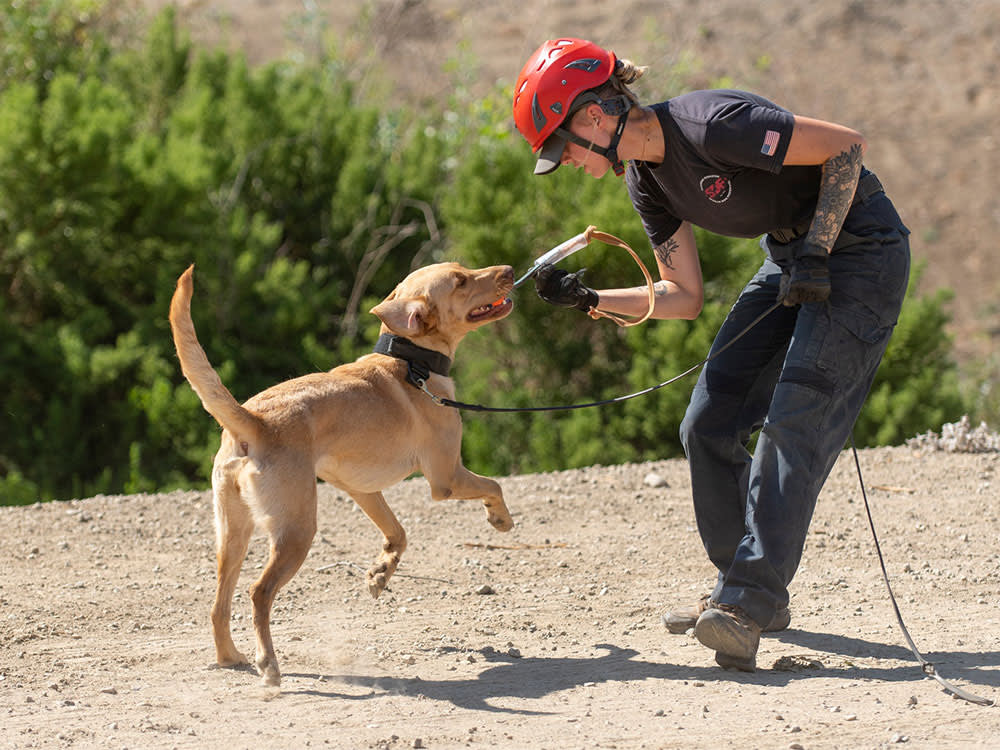
Image Source: images.ctfassets.net
Phase 1: Selection and Foundation Building
The success of any search team starts with choosing the right dog and building a rock-solid base of skills. Not every dog is cut out for this demanding work.
Selecting the Right Canine Candidate
Choosing the right breed or mix is important, but temperament matters more. Look for dogs with high drive, stable nerves, and a strong desire to work and please their handler. Good breeds often include German Shepherds, Labrador Retrievers, and various scent hounds.
Key traits to look for in a potential SAR dog:
- High Play Drive: The dog must love to play, as toys or food will be the primary reward.
- Good Health: The dog must have the stamina for long hours in tough terrain.
- No Fear Issues: The dog cannot be easily scared by loud noises, strange surfaces, or confined spaces.
- Strong Focus: The dog must be able to ignore distractions when working.
Establishing Core Obedience Skills
Before any specialized scent work begins, the dog must master basic obedience. This forms the bedrock of safety and control in dangerous situations. This advanced level goes far beyond simple “sit” or “stay.”
We call this advanced SAR dog obedience. The dog must respond instantly to commands, even when tired or stressed.
Essential Obedience Commands for SAR Work:
- Heel: Walking closely beside the handler, regardless of the surroundings.
- Recall (Come): Coming back to the handler immediately, even when distracted by scent or play.
- Stay/Wait: Remaining in a set position for long periods, often while the handler scouts ahead.
- Down: Lying down instantly on command.
Use positive reinforcement heavily here. Keep training sessions short, fun, and rewarding. Success builds confidence in both partners.
Phase 2: Introducing Scent Work Fundamentals
Once obedience is strong, you can move toward teaching the dog what its job actually is: finding a specific target scent. This phase differentiates general obedience training from specialized canine search and rescue skills.
Developing Search Drive and Focus
The dog needs to learn that searching is the best game ever. You must build a high desire for the reward associated with locating a target.
- Start Simple: Begin in a quiet room. Hide a favorite toy or treat very close by.
- Use an Alert Cue: As the dog finds the item, give a specific sound or word (like “Find it!” or a whistle). This becomes the indicator that the search is successful.
- Increase Difficulty Slowly: Gradually move the hiding spot farther away or use less obvious rewards.
This initial step is crucial for all types of scent work, whether you are focusing on air scent dog training or specialized tracking.
Imprinting the Target Scent
The next step involves teaching the dog precisely what scent to look for. This process is called scent imprinting.
For tracking dog instruction, this means introducing the specific scent of the missing person, often via a worn article of clothing. For area searches, it might mean scent articles representing human odor in general.
- Scent Article Handling: Only allow the dog to smell the scent article when you initiate a training search. Never let the dog play with the article unsupervised.
- Association: Pair the scent article with the highest value reward immediately. The dog must learn: “Smell this = Big Reward.”
- Duration: Practice short exposures to the scent initially, building up to sustained sniffing over longer periods.
Phase 3: Specialization Tracks
SAR dogs specialize based on the mission they are trained for. The training diverges significantly depending on whether the dog is looking for live missing persons, human remains, or focusing on following a trail.
Air Scent Dog Training
Air scent dog training teaches the dog to search a wide area for any human odor floating in the air, regardless of direction. They do not follow a specific trail.
- The Cone of Scent: Dogs learn to move across a search area, constantly sampling the air for human volatile organic compounds (VOCs).
- Random Hides: In this discipline, decoys (or “hides”) are placed randomly throughout a large area. The dog works independently of the handler, using their nose to “vector in” on the scent plume.
- Broadcasting Search Pattern: Handlers must teach dogs to search systematically, covering ground efficiently rather than circling one spot. This requires extensive practice in varied terrain—fields, forests, and urban settings.
Tracking Dog Instruction
Tracking dog instruction focuses on following the specific scent trail of an individual left on the ground. This requires intense focus on the path taken, not just the presence of human odor.
- Ground Disturbance: The dog is taught to focus on the disturbed ground and the scent pooled low to the surface.
- Lead Work: Tracking dogs often work on a long line or specialized harness. The handler must learn to “read” the dog’s tension on the line to know if the track is fresh or old.
- Scenario Practice: Practice tracks must be laid by people wearing specific footwear and often involve turns, water crossings, and scent contamination to mimic real-world challenges.
Cadaver Dog Training Methods
Cadaver dog training methods are similar to air scent work, but the target scent is decomposed human remains (HR). This requires specialized scent articles preserved under strict legal and ethical guidelines.
- Scent Discrimination: These dogs must learn to differentiate between living human scent (if air-scenting) and HR scent, or simply focus exclusively on HR scent.
- Indication: The alert (indication) must be precise. In HR work, the dog is often trained to give a passive indication—lying down over the find—to avoid disturbing potential evidence.
- Environmental Tolerance: Training must occur in diverse locations where remains might be found, including buried, submerged, or exposed environments.
Phase 4: Building Search Scenarios and Stamina
Once the dog reliably alerts to the target scent in a controlled setting, the real work of operational SAR dog preparation begins. This involves increasing complexity, duration, and environmental stress.
Increasing Duration and Coverage
A search in the real world can last hours or days. The dog must maintain peak performance throughout.
- Progressive Search Lengths: Gradually increase the time the dog spends actively searching without a known find. Start with 15 minutes, moving up to one-hour increments.
- Varying Terrain: Search in thick woods, rocky areas, urban rubble, and across water obstacles. Each surface presents new challenges to footing and scent dispersion.
- Weather Exposure: Train in rain, heat, snow, and wind. Dogs must learn to work even when conditions are uncomfortable.
Introducing Distractions and Contamination
Real searches are chaotic. You must simulate this chaos safely during training.
- Human Contamination: Have multiple searchers, bystanders, or even hidden “live finds” nearby while the dog searches for the target scent. The dog must learn to ignore all other humans or only alert on the specific target.
- Noise Exposure: Use sirens, helicopters, barking dogs, or heavy machinery in the background while the dog works. This is vital for disaster response dog training.
Mastering the Alert (Indication)
The alert is how the dog communicates a successful find to the handler. It must be clear, consistent, and distinct from excited play.
| Alert Type | Description | Best Suited For |
|---|---|---|
| Active Alert | Barking, pawing, or digging at the find location. | Wilderness (where noise helps locate the dog). |
| Passive Alert | Lying down, sitting, or staring intently at the find. | HR or evidence recovery (to avoid disturbing the site). |
| Change of Behavior | Sudden stop, stiff body posture, intense focus. | Tracking (where movement must cease). |
The handler must immediately reward the correct alert behavior. If the dog gives a false alert, the handler should calmly redirect the dog back to searching without punishment.
Phase 5: Certification and Team Readiness
The ultimate goal of all this preparation is to pass the rigorous search and rescue dog certification process required by established SAR organizations. Certification proves that the team is ready for live missions.
Preparing for Certification Testing
Certification tests are designed to be harder than any real-life scenario they might face. They test reliability under stress.
- Simulating Timed Searches: Most organizations require a certain percentage of ground coverage within a set time limit (e.g., 10 acres per 30 minutes).
- Handler Blind Tests: The handler is often kept unaware of the exact location of the test subject, forcing them to rely solely on their dog’s reactions. This tests the handler’s ability to read subtle cues.
- Reviewing Standards: Obtain the specific standards manual for the certifying body (e.g., FEMA, NASAR, or regional groups). Train specifically against those metrics.
The Role of Wilderness Search Dog Handling
Effective wilderness search dog handling requires the handler to be as skilled as the dog. The handler must manage logistics, navigation, safety, and communication while interpreting the dog’s signals in often remote settings.
The handler must be proficient in:
- Map reading and GPS use.
- First aid and canine emergency care.
- Maintaining team morale during long deployments.
Specific Considerations for Disaster Response Dog Training
When preparing for sudden-onset disasters, the training protocols change slightly to accommodate structural collapse environments. This is known as disaster response dog training.
Training in Rubble and Confined Spaces
Unlike open wilderness searches, disaster zones involve unstable footing and tight quarters.
- Surface Tolerance: Dogs must learn to navigate sharp metal, concrete shards, and unstable piles of debris without hesitation or fear.
- Breathing Hazards: While masks are not used on the dog, handlers must be aware of air quality. Training often involves searching areas simulating dust and low visibility.
- Vertical Movement: Practicing climbing and descending unstable slopes or even ladders (with specialized assistance) is necessary for urban SAR operations.
Maintaining Proficiency: The Ongoing Commitment
Gaining certification is not the end; it is the beginning of maintaining readiness. SAR dogs require constant reinforcement to keep their skills sharp, especially given the low frequency of actual deployments.
Refresher Training Schedule
A consistent training schedule prevents skill degradation.
| Training Focus | Frequency | Goal |
|---|---|---|
| Obedience & Recall | Daily (short bursts) | Maintain immediate response under high distraction. |
| Scent Work (Target Specific) | 2–3 times per week | Keep the alert behavior sharp and reliable. |
| Full Scenario Simulation | Monthly | Test endurance, navigation, and team communication. |
| Cross-Training | Quarterly | Practice in new terrains or simulate different disaster types. |
Mental and Physical Health Maintenance
A working dog is an athlete. Proper nutrition, veterinary care, and mental enrichment are non-negotiable parts of the handler’s responsibility. Burnout affects both partners. Keep training fun to prevent the dog from viewing the job as monotonous work.
FAQ About Training a SAR Dog
Q: How long does it take to train a SAR dog?
A: It typically takes 18 months to 3 years of dedicated, consistent training before a team is ready for initial certification, depending on the dog’s aptitude and the complexity of the desired specialty (like wilderness vs. disaster).
Q: Can I use my family pet for SAR work?
A: While many family pets have excellent noses, SAR work demands exceptional drive, stability, and focus that must be assessed by experienced trainers during the selection phase. Not all good dogs make good SAR dogs.
Q: Do SAR dogs get paid?
A: SAR dogs are not paid employees. They are highly trained volunteers working alongside their handlers, who are also typically volunteers. The reward for the dog is play, food, and praise.
Q: What happens if my dog fails the certification test?
A: Failure usually means the team is not ready yet. Certifying bodies provide feedback on weak areas (e.g., handler communication, search pattern failure, or unreliable alert). The team then trains specifically to address those weaknesses before retesting.
Q: Are there age limits for starting SAR training?
A: While dogs are often started between 1 and 2 years old, older dogs can be successful, especially in specialized tracking or HR work, provided they are physically sound. The dedication of the handler is more important than the exact starting age.