
Can I measure my dog myself? Yes, you can measure your dog yourself using simple tools like a tape measure and a helper. Getting the right size is key for your dog’s safety and comfort when using a new pet door. This guide will show you exactly how to find the right dog door dimensions.
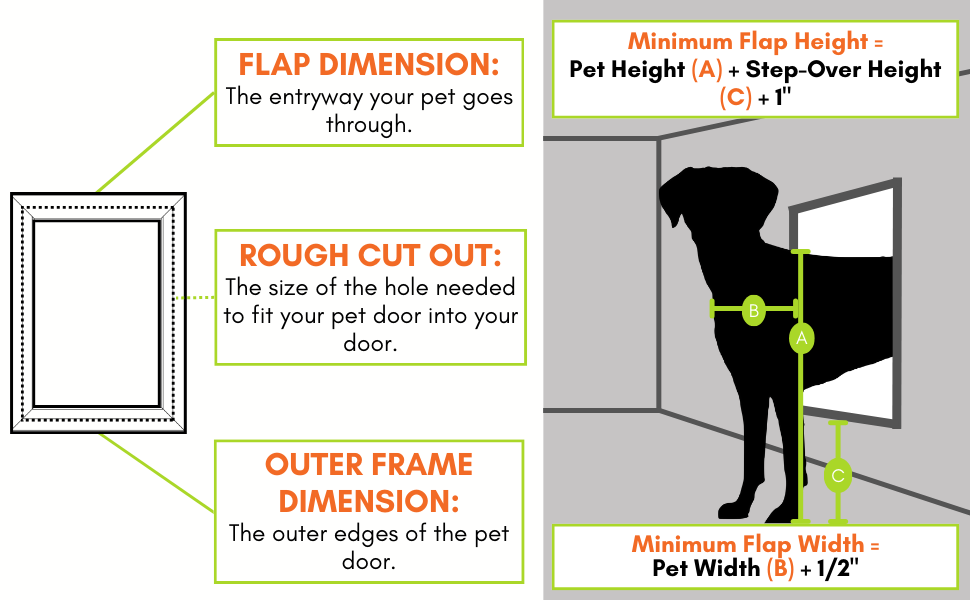
Image Source: cdn.shopify.com
Why Correct Sizing Matters for Your Pet Door
Putting in a dog door is exciting. But if the opening is too small, your furry friend might get stuck or hurt. If it’s too big, cold air, pests, and even wild animals might come inside. Getting the correct dog door dimensions right prevents these problems. It ensures your dog can use the flap easily, without having to duck too low or stretch too high. This guide makes fitting a doggy door a simple task.
Essential Tools for Accurate Dog Measurements
Before you start, grab a few things. These tools help you take precise measurements. Accuracy is important for a good fit.
- Flexible Tape Measure: A soft cloth or vinyl tape measure works best. Hard metal ones are hard to wrap around your dog.
- A Helper: Having someone hold your dog still or offer a treat makes things much easier.
- Treats or Toys: Use these to keep your dog calm and in the right position.
- Notebook and Pen: Write down all your numbers right away.
Step-by-Step Guide: Measuring Dog For Flap Door
We need two main measurements for any dog door: height and width. We must measure the widest and tallest part of your dog when they are standing naturally. Do not measure when your dog is sitting or bending.
Measuring Dog Height for Dog Door
This is the most important measurement. It ensures your dog doesn’t have to stoop uncomfortably.
1. Get Your Dog in Position
Ask your helper to stand your dog squarely on a flat floor. Make sure your dog is standing tall and straight. Shoulders should be relaxed.
2. Locate the Highest Point
Ask your helper to keep your dog still. Find the highest point of your dog’s body. This is usually the top of the head or the tips of the ears, depending on the breed. For most dogs, it is the very top of the head, between the ears.
3. Measure from Floor to Highest Point
Hold the zero end of the tape measure flat on the floor, right under your dog’s highest spot. Pull the tape measure straight up. Read the number where it meets the top of your dog’s head or ears. Write this down. This is your dog door opening measurement for height.
- Example: If your Great Dane’s head peaks at 30 inches, write down 30 inches.
Measuring Dog’s Width for Pet Door
Next, we find out how wide your dog is when moving through the opening. This measurement ensures they can pass through without scraping their sides.
1. Identify the Widest Point
The widest part of most dogs is across their shoulders or hips. For many breeds, especially broad-chested ones, the shoulders are the widest part.
2. Measure Shoulder to Shoulder
Have your helper stand behind your dog. Use the tape measure to go across your dog’s body, from the edge of one shoulder to the edge of the other. Keep the tape snug but not tight. It must follow the natural curve of the body.
- Tip: If your dog has a very thick coat, try to press the tape measure slightly into the fur to get a closer body measurement.
3. Measure the Widest Point (If Different)
If your dog has very wide hips that stick out more than their shoulders, measure across the hips instead. Write down the larger of the two width measurements. This is your required width measurement.
Calculating the Required Dog Door Size
Once you have your dog’s actual body measurements, you must add extra space. This extra space is crucial. It allows for easy movement, fluffy coats, and a little room for error. This addition is part of using a good pet door sizing guide.
Adding the Clearance Buffer
Manufacturers build these extra inches into their standard sizes, but it’s good practice to know what size you need before looking at the dog door sizing chart.
1. Height Buffer
Take your dog’s measured height. Add 1.5 to 2 inches to this number. This extra space ensures the top of your dog’s head clears the top frame of the door flap easily.
- Formula: Dog Height + 1.5 to 2 inches = Required Flap Height
2. Width Buffer
Take your dog’s measured width. Add 2 to 4 inches to this number. This larger buffer accounts for moving through the opening and helps prevent the door frame from rubbing against their shoulders.
- Formula: Dog Width + 2 to 4 inches = Required Flap Width
Referencing the Dog Door Sizing Chart
Now that you have your required measurements, use a dog door sizing chart. These charts link standard door sizes to the actual size of the flap opening.
| Dog Weight (Lbs) | Typical Height Range (Inches) | Typical Width Range (Inches) | Recommended Flap Height (Inches) | Recommended Flap Width (Inches) |
|---|---|---|---|---|
| Under 25 lbs | 8″ – 11″ | 6″ – 8″ | 10 – 12 | 8 – 11 |
| 25 – 75 lbs | 11″ – 16″ | 8″ – 11″ | 13 – 18 | 10 – 14 |
| 75 – 100 lbs | 16″ – 20″ | 11″ – 14″ | 18 – 22 | 13 – 17 |
| Over 100 lbs | 20″+ | 14″+ | 22″+ | 16″+ |
Note: This table is a general guideline. Always use your specific dog measurements for the best fit.
Look for a door size where the advertised opening dimensions are equal to or slightly larger than your calculated required dimensions. This is the foundation of choosing correct dog door dimensions.
Using a Dog Door Size Calculator
Many online stores offer a best dog door size calculator. If you are buying online, these tools are very helpful. You simply input your dog’s weight, height, and width. The calculator suggests the best-sized door based on brand standards.
However, always double-check the calculator’s recommendation against your physical measurements. The calculator might use slightly different buffering rules than you prefer.
Special Considerations for Different Dog Types
Not all dogs are built the same. Breed characteristics change how you measure and what you select.
Small and Toy Breeds
Small dogs often have very low clearance needs. The biggest risk here is the bottom frame being too high off the ground.
- Focus: Ensure the bottom of the flap opening is no more than 1 to 2 inches off the floor. If the bottom frame is too tall, they might trip or struggle to step over.
Giant Breeds
For dogs like Great Danes or Mastiffs, height is the primary concern. You might need a custom or extra-large commercial door.
- Focus: Do not guess on the height. An extra inch of clearance is vital for giant breeds to walk through without rubbing their backs or shoulders.
Unique Body Shapes (e.g., Dachshunds or Bulldogs)
Dogs with long bodies and short legs (Dachshunds) or very broad heads (Bulldogs) require special attention to width and height balance.
- Dachshunds: Width might not be an issue, but the height must be generous enough so their long backs do not scrape the top edge when they stand fully upright.
- Bulldogs: Their wide chests mean the width buffer needs to be at the higher end of the recommended range (closer to 4 inches added).
Determining Door Placement: Installation Measurements
Measuring your dog is only half the battle. You also need to measure the space where the door will go. This involves dog door installation measurements.
Measuring for Flap Doors in Exterior Doors
If you are cutting a hole in a solid exterior door (wood or metal), you must follow the door manufacturer’s template or use the product’s specific cut-out dimensions.
1. Flap vs. Cutout Size
A dog door is sold by its flap size (the size of the opening your dog passes through), but the cutout size (the hole you drill) is always larger. Always use the template provided by the door maker for the cutout.
2. Positioning on the Door
The bottom of the dog door flap opening should align with your dog’s measurements (the floor to chest measurement, often).
- Rule of Thumb for Placement: The bottom of the actual plastic or metal flap frame should be about 1 to 2 inches above your dog’s natural standing shoulder height if your dog is small, or align it based on their lowest point of travel when walking through. For most dogs, placing the bottom of the flap opening about 2 inches above the floor is standard, allowing for minor scoots underneath.
Measuring for Wall Installation
Installing a pet door in a wall requires deeper consideration. You must account for the wall’s thickness, insulation, and siding materials.
1. Wall Thickness
Wall thickness varies greatly. Standard interior walls might be 4.5 inches thick, while exterior walls with siding and insulation can be 6 to 8 inches thick or more.
- Tunnel Length: Most wall-mount dog doors come with an adjustable tunnel piece. Measure the exact depth of your wall cavity from the inside wall surface to the outside wall surface. Ensure the door’s tunnel kit can span this distance, or order an extension kit if needed.
2. Interior Trim and Exterior Siding
The door frame must sit flush against the interior drywall and the exterior siding. Measure carefully so that the framing components cover all rough edges neatly without overlapping too much.
Review and Final Check Using Dog Measurements
Before cutting any holes or placing an order, perform this final check. This confirms you have successfully completed the process of measuring dog for flap door.
The “Walk-Through Test”
If you cannot find a template or want to test the size physically, use cardboard.
- Cut a piece of cardboard to the exact dimensions you calculated (Required Flap Height x Required Flap Width).
- Hold this cardboard cutout up in the door or wall space where the pet door will go.
- Ask your dog to walk through the opening.
If your dog walks through easily, without hesitation, stopping, or scraping any part of their body, your measurements are likely correct. If they hesitate, the opening is probably too small, and you need to increase your calculated dimensions slightly.
Consulting the Dog Door Sizing Chart Again
Once you have your final required dimensions (e.g., 17 inches high by 14 inches wide), look at the dog door sizing chart one last time. You are searching for the next size up that comfortably exceeds these numbers. For example, if you need 17×14, you might look for a door advertised as 18×15 or 19×16.
Maintaining Visibility of Measurements
It is helpful to keep your measurements handy, especially if you are purchasing a replacement door later. You can use this data for future purchases or when moving houses.
| Measurement Type | Dog Measurement | Added Buffer | Required Door Size |
|---|---|---|---|
| Height | [Your Dog’s Height] | +1.5″ to 2″ | [Required Height] |
| Width | [Your Dog’s Width] | +2″ to 4″ | [Required Width] |
This organized format helps when using any best dog door size calculator or physical chart.
Final Thoughts on Fitting a Doggy Door
Fitting a doggy door successfully relies entirely on precise initial measurements. Remember, it is always safer for a door to be slightly too large than slightly too small. A slightly large door might let in a bit more air, but a too-small door can cause pain or lead to your dog refusing to use it altogether. Take your time, use your helper, and follow these steps to ensure a comfortable and safe passage for your pet.
Frequently Asked Questions (FAQ)
Q1: How much space should I leave above my dog’s head for the dog door?
You should aim for at least 1.5 to 2 inches of clearance above the highest point of your dog’s head or ears. This is added to your how to measure dog height for dog door result. This extra space allows for comfortable movement, even when your dog is trotting or carrying a toy.
Q2: What is the standard dog door opening measurement based on weight?
While weight is a good starting point (as seen in the table), it is less reliable than direct measurement. Generally, doors for dogs under 25 lbs have an opening of around 10×8 inches, while very large doors for dogs over 100 lbs can exceed 22×17 inches. Always measure your dog directly instead of relying only on weight estimates.
Q3: Should the dog door size be based on my dog’s sitting height?
No. Dog doors must accommodate your dog when they are standing fully erect or slightly stretching to walk through. Measuring sitting height will result in a door that is far too small, forcing your dog to duck severely, which can cause back problems over time.
Q4: Do I need to measure measuring dog’s width for pet door if I am buying a small door?
Yes, absolutely. Even small dogs have surprising shoulder widths. If you have a sturdy breed like a small terrier or a French Bulldog, their width might exceed what you expect for their height. Always measure both dimensions to ensure they clear the frame without rubbing their sides.