
Yes, you absolutely can get a service dog for Postural Orthostatic Tachycardia Syndrome (POTS). A service dog can be trained to perform specific tasks that help mitigate the symptoms of POTS, making daily life much safer and more manageable.
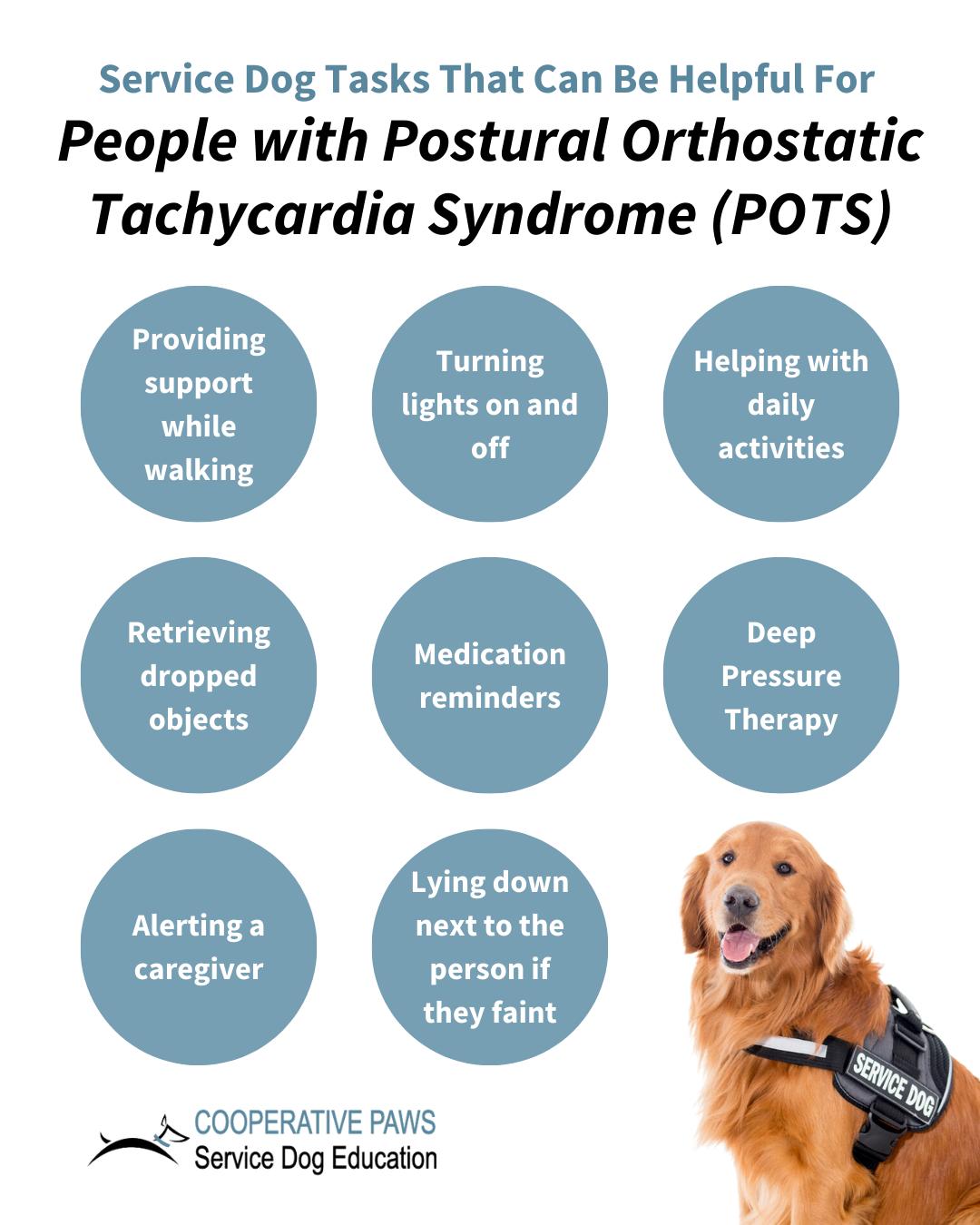
Image Source: cooperativepaws.com
Deciphering POTS Service Dog Requirements
Getting a service dog for POTS involves meeting specific legal and practical requirements. The rules for service animals are set by the Americans with Disabilities Act (ADA) in the United States. This law defines a service animal clearly.
What Qualifies as a Disability Under the ADA?
To qualify for a service dog, you must have a physical or mental impairment that substantially limits one or more major life activities. POTS often qualifies. Your condition must require the assistance of a trained service animal.
POTS causes many issues. These include dizziness, fainting (syncope), and severe fatigue. These symptoms impact moving, working, and caring for yourself. This usually meets the legal threshold.
Key POTS Service Dog Requirements
The main requirement is task training. The dog must be trained to perform specific work or tasks for your disability. Merely providing comfort is not enough for a service dog.
| Requirement Area | Details for POTS |
|---|---|
| Medical Need | Physician documentation confirming POTS diagnosis. |
| Task Specificity | Dog must be trained for specific, observable tasks. |
| Public Access | Dog must be under control at all times. |
| Training Period | Must show consistent task performance. |
Qualifying for a POTS Service Dog
Proving you need a service dog requires clear documentation and a solid plan for training. This section breaks down how you prove your need.
Gathering Disability Documentation for Service Dog POTS
You need solid proof of your POTS. A letter from your doctor is vital. This letter should confirm your diagnosis. It should also state how your POTS limits your daily life.
Your doctor needs to affirm two key points:
- You have a recognized disability.
- The service dog’s tasks mitigate the symptoms of that disability.
Do not let your doctor write a letter saying you want a service dog. They must write that you need one due to specific limitations.
Distinguishing Emotional Support Animal vs Service Dog for POTS
This is a very common point of confusion. People often mix up these roles. It is crucial to know the difference.
An Emotional Support Animal (ESA) provides comfort just by being with you. ESAs do not need special training. They do not have the same public access rights as service dogs under the ADA.
A Service Dog is specifically trained to perform tasks. For POTS, these tasks might include deep pressure therapy or retrieving medicine. Only service dogs have full public access rights.
If you only need comfort, an ESA might fit. If you need active help to manage your physical symptoms, you need a service dog.
Finding a POTS Service Dog Trainer
Training a dog for POTS tasks takes skill and time. You have a few main paths for finding a qualified trainer or program.
Organizations That Train Service Dogs for POTS
Some large national organizations train dogs for various disabilities. Not all of them train specifically for POTS. You must check their criteria carefully.
- Non-Profit Programs: These groups often have long waiting lists. They may offer fully trained dogs. They often follow strict standards.
- Local/Regional Trainers: Smaller, specialized trainers might be easier to access. Look for trainers experienced with mobility or medical alert work.
When contacting organizations, ask directly: “Do you train service dogs specifically for POTS or autonomic dysfunction?”
Self-Training vs. Professional Training
Many people choose to train their own dog. This is called owner-training.
Owner-Training Advantages:
- You choose the dog breed and personality.
- It is usually much cheaper than buying a fully trained dog.
- The bond between you and the dog is often very strong.
Owner-Training Challenges:
- It requires a massive time commitment.
- You must master complex task training for POTS service dogs.
- You are fully responsible for ensuring the dog meets all POTS service dog requirements.
If you self-train, hiring a professional trainer for consultation is wise. They can help you proof skills and ensure public access readiness.
Task Training for POTS Service Dogs
The dog’s job is not cuddling. The dog must perform specific actions that help when POTS symptoms strike. The training must be precise and reliable.
Essential Tasks for POTS Assistance
Service dogs for POTS focus on tasks that address blood flow issues, dizziness, and fatigue.
Mobility Support:
- Bracing and Counterbalance: A larger dog can provide a steady support when the handler feels faint while standing or walking.
- Retrieving Items: If you drop your salt tablets, phone, or water bottle during a dizzy spell, the dog fetches it.
Medical Alert and Intervention:
- Pacing Assistance: Some dogs learn to alert the handler when they have been upright or active for too long, prompting a needed rest break before symptoms escalate.
- Deep Pressure Therapy (DPT): The dog is trained to lie across the handler’s lap or chest during severe fatigue or dizzy episodes. This firm pressure can help stabilize heart rate and blood pressure temporarily.
Environmental Assistance:
- Finding an Exit or Chair: If disoriented or dizzy in public, the dog can be trained to lead the handler straight to a seat or the door.
Training these tasks takes many months, sometimes years. Every task must be taught, practiced in many settings, and proofed until it is automatic.
Applying for a Psychiatric Service Dog for POTS
Sometimes, POTS is accompanied by severe anxiety or panic attacks due to fear of fainting. If anxiety significantly limits your life, you might explore applying for a psychiatric service dog for POTS.
A service dog for psychiatric needs focuses on tasks like interrupting panic, grounding techniques, or leading the person to a safe space.
You must prove that the psychiatric symptoms, not just the physical ones, limit your life majorly. Your medical team needs to support this dual need. You will likely work with a trainer specializing in psychiatric service work.
Financing a POTS Service Dog
Service dogs are a big investment. Fully trained dogs can cost between \$15,000 and \$30,000 or more. Self-training costs less but involves vet bills, equipment, and training fees.
Exploring Options for Financing a POTS Service Dog
Most medical insurance plans, including Medicare and Medicaid, do not cover the cost of service dogs. This is because they are often not deemed a “durable medical device.”
Here are ways to manage the cost:
- Service Dog Grant Organizations: Many charities offer grants to help offset the cost. Look for groups that specifically support individuals with chronic illnesses or autonomic disorders.
- Fundraising: Crowdfunding platforms are popular for owner-trainers. Share your story and training journey openly.
- Veterans Benefits: If you are a veteran, the VA may cover costs if the dog meets specific criteria related to service-connected disabilities.
Be wary of any organization demanding payment upfront for a fully trained dog without a clear vetting and placement process.
Legal Rights for POTS Service Dog Owners
Once you have a fully trained service dog, you gain important civil rights under the ADA. Knowing these rights protects you and your dog in public spaces.
Access Rights in Public
The ADA grants service dogs access to most public places where the public is generally allowed. This includes stores, restaurants, libraries, and public transit.
Key Points on Access:
- Staff can only ask two questions:
- Is the dog a service animal required because of a disability?
- What work or task has the dog been trained to perform?
- Staff cannot ask for certification papers or documentation.
- Staff cannot ask about your specific diagnosis.
Access Limitations
There are limited exceptions where a service dog may be excluded. This usually happens if the dog is:
- Out of control (barking, running loose).
- Not house-trained (defecates or urinates inappropriately).
- Posing a direct threat to the health or safety of others.
If your POTS symptoms cause your dog to become briefly distracted, remain calm and immediately regain control. Maintaining control is central to keeping your legal rights for POTS service dog owners.
Maintaining a Healthy Partnership
Getting the dog is the first step. Keeping the partnership strong requires ongoing work.
Ongoing Training and Health Checks
Even after initial training, you must practice tasks regularly. This keeps the dog sharp. It ensures the dog meets high POTS service dog requirements throughout its working life.
Keep up with routine veterinary care. A sick or injured service dog cannot work effectively. Their health directly impacts your safety.
Handler Health and Dog Performance
POTS symptoms can fluctuate wildly. Some days, you might feel great and barely need the dog. Other days, you might be bedridden. The dog must be trained to recognize subtle shifts in your state, even when you don’t feel them yet.
If your POTS worsens significantly, you might need to consult your trainer about updating the dog’s training or modifying tasks.
FAQ Section
Can a puppy be a service dog for POTS?
No. A puppy cannot be a service dog. The ADA requires the animal to be fully trained to perform specific tasks related to the handler’s disability. Most trainers agree that dogs must be at least 18 months to two years old to reliably perform complex service tasks.
Are there specific breeds recommended for POTS service dogs?
There is no required breed. However, dogs must meet size and temperament standards for the tasks required. Larger, sturdier breeds like Labrador Retrievers, Golden Retrievers, or Standard Poodles are often chosen for bracing and mobility tasks. Smaller dogs can still excel at alerting and retrieving if they are sturdy enough for deep pressure therapy.
What if my dog fails public access testing?
If your dog fails access tests due to lack of control, it stops being recognized as a service dog under the ADA until the issue is fixed. You must immediately work with your trainer to correct the behavior. If the behavioral issues cannot be resolved, the dog may need to transition to being an ESA or a pet.
Does my POTS dog need special ID or vests?
Legally, no. Identification tags, vests, or harnesses are not required by the ADA. However, many handlers use them. Vests can help inform the public that the dog is working. This can reduce unwanted interactions, allowing the dog to focus on you.
If I move states, do my service dog rights change?
The ADA is a federal law, so your public access rights remain the same across all 50 states. However, some states have specific laws regarding service dogs in housing (Fair Housing Act) or specific areas like state parks. Always research local laws in your new area.